
Roosevelt Island: Tram Rides and 7 Things to See
Roosevelt Island: Tram Rides and 7 Things to See
Guía rápida
- What to see on Roosevelt Island
- 1. Roosevelt Island Tram
- 2. Southpoint Park
- 3. Smallpox Memorial Hospital
- 4. Four Freedoms Park
- 5. The Octagon
- 6. Lighthouse Park
- 7. The Girl Puzzle monument
- A short history of Roosevelt Island
- How to get to Roosevelt Island
- 10 Tips to Save on Your Trips
- 👇🏼 Leave your email and be part of something special.
- Deals for your getaway
- 15% off your hotel
Roosevelt Island is a residential neighborhood on a narrow strip of land in the middle of the East River, wedged between Manhattan and Queens (officially, it's a Manhattan neighborhood). The island is so narrow it measures just 800 feet at its widest point.
These days it draws plenty of visitors thanks to the scenic ride on the Roosevelt Island Tram and its riverside paths with panoramic views of Manhattan. But it has a very dark past, which of course I'm going to tell you all about.
What to see on Roosevelt Island
The main attraction on this island of 12,000 residents is the tram -the Roosevelt Island Tramway– but there are also historic sites, parks and viewpoints you shouldn't miss.
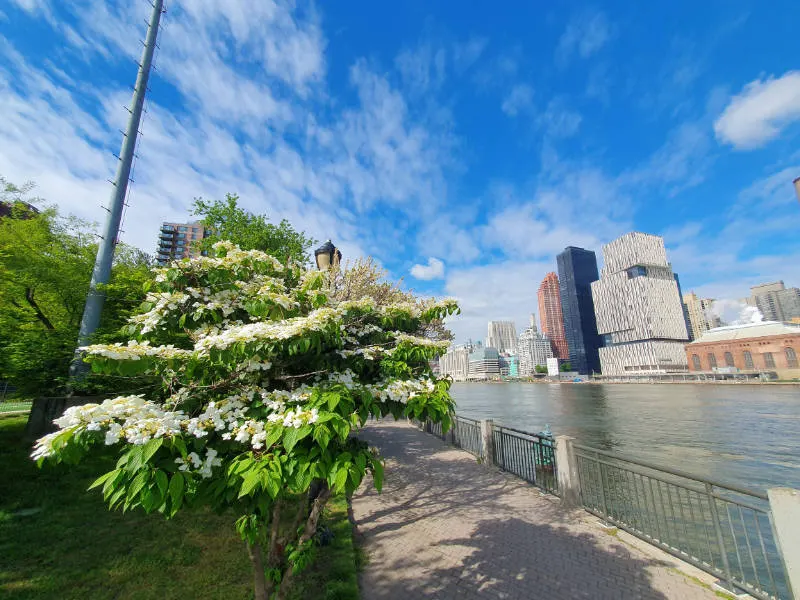
It's also a fantastic place to explore on foot. You'll be surrounded the whole way by beautiful flowering trees (in full bloom if you travel in April or in May to New York).
You can also take a look at the new Cornell Tech campus and several monuments and parks with Manhattan or Queens as a backdrop.
Below I'll walk you through the main attractions on Roosevelt Island. If you set your mind to it, you can see them all in half a day on foot. It's an ideal plan if you're feeling worn down by Manhattan's nonstop noise 🚁🚑🚨.
1. Roosevelt Island Tram
Hands down the most fun thing about Roosevelt Island is that it's connected to Manhattan by New York's only aerial tram: the Roosevelt Island Tram.
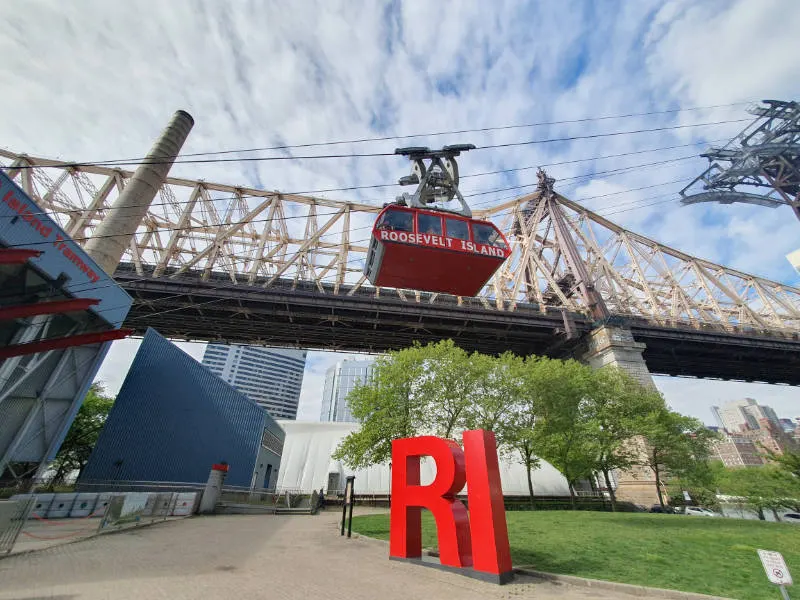
The Tramway links Manhattan with Roosevelt Island in a quick 5-minute ride, gliding over the East River alongside the Queensboro Bridge. Read all the details for riding the Tram, including the Tramway schedule, how much it costs and where the stations are.
The Tram, which opened in 1976, is a delightful surprise for visitors and also the preferred way for islanders to get quickly to Midtown East in Manhattan.
If you'd rather, you can also reach Roosevelt Island by subway, since the island has its own station (Roosevelt Island, F line), but trust me, the Tram is a far more fun way to get there!
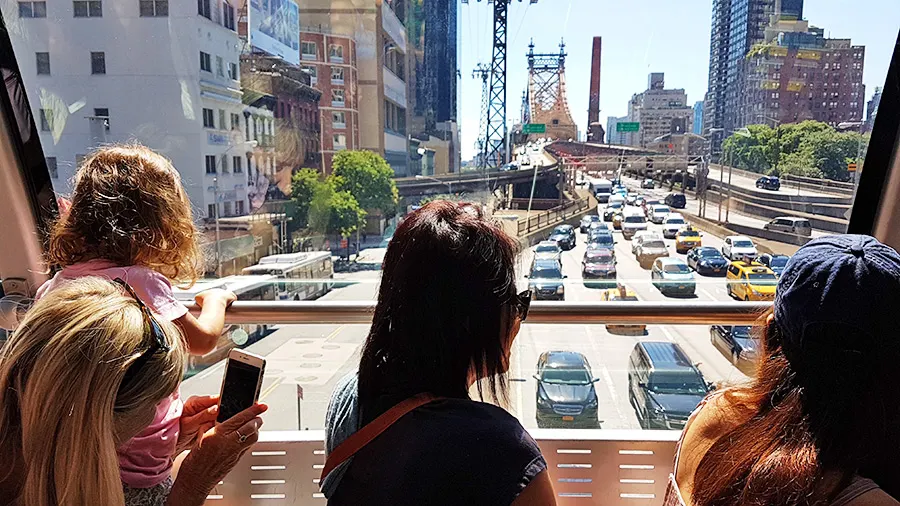
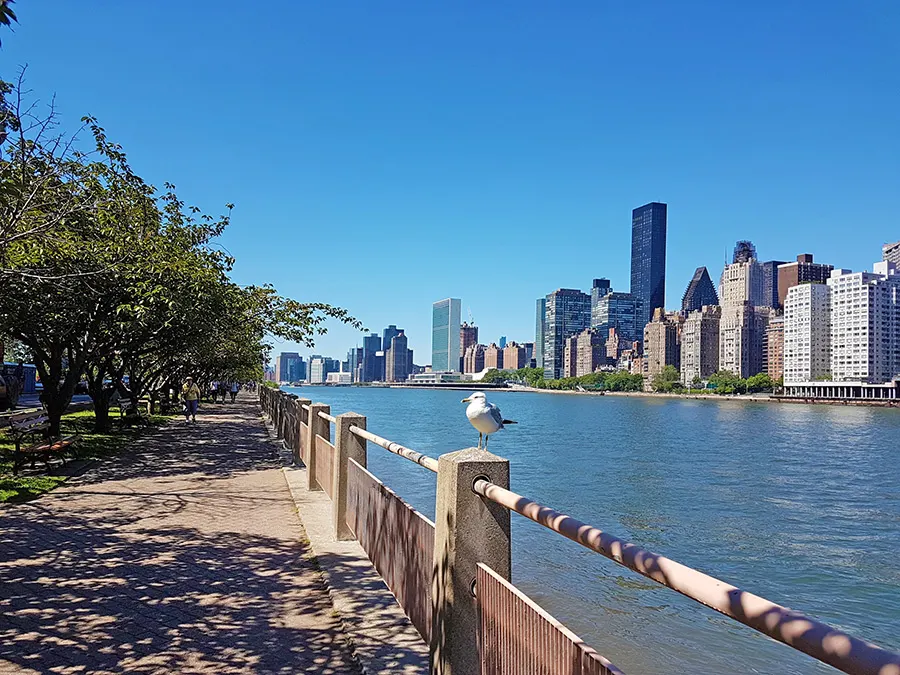
When you step off the tram car at Tramway Plaza, the island terminal, you'll have two options: walk toward the north end or the south end of the island, along a pleasant riverside promenade that runs the full length of the island.
There are also bus routes on Roosevelt Island, but honestly they take forever to show up, and walking with those Manhattan views in the background is a real treat (put on some Gershwin for the stroll!).
If you have the time, I recommend seeing the island from north to south, because along the way you'll find several parks, stunning views of Manhattan and Queens, and historic buildings that witnessed a New York besieged by smallpox, tuberculosis and mental illness. Curious? Keep reading!
2. Southpoint Park
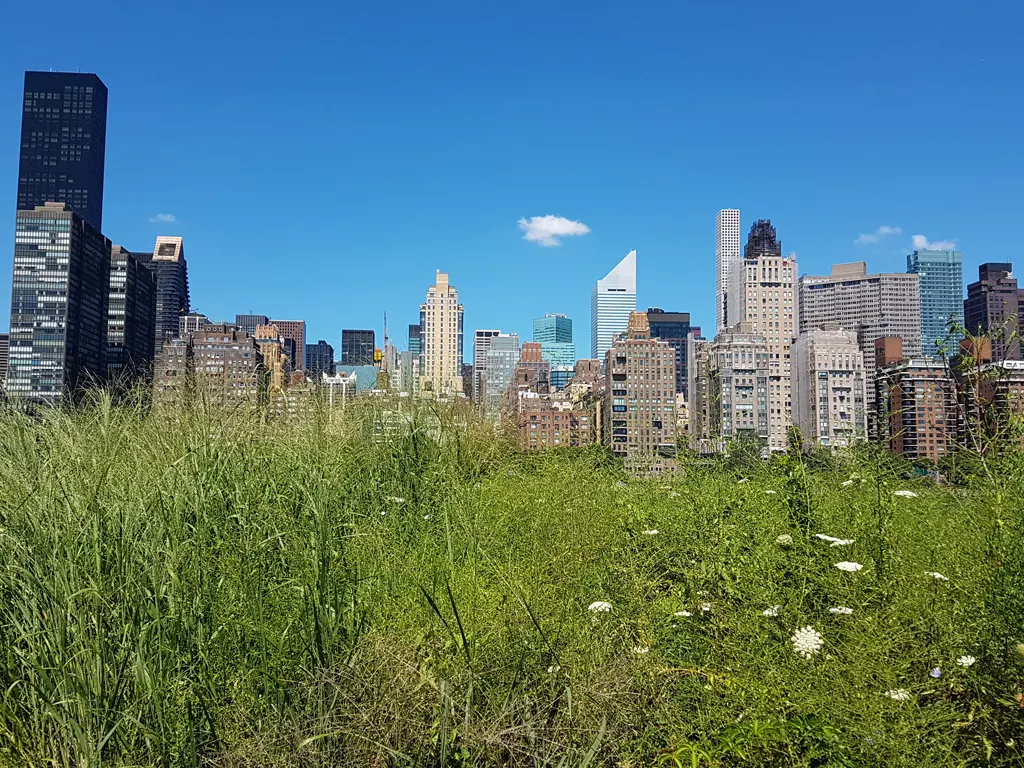
If you decide to walk from the Tramway station toward the south end of the island, the first thing you'll come across is Southpoint Park.
What makes this park special is that it preserves New York's native flora, showing you what the city looked like before it was settled.
3. Smallpox Memorial Hospital
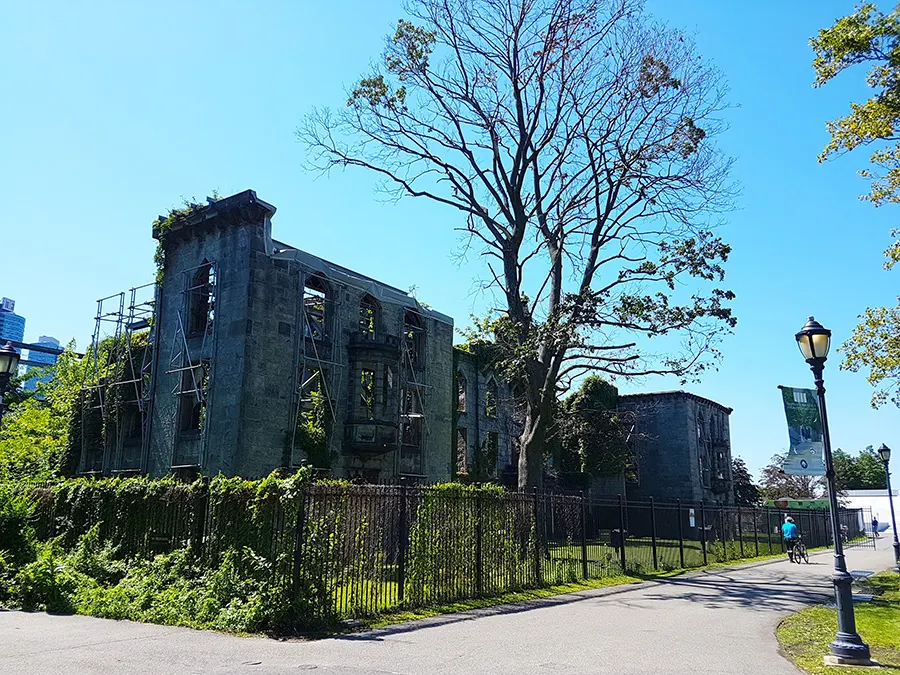
A little farther south, on the grounds of Southpoint Park, you'll see the ruins of the Smallpox Hospital, built in 1856 and closed in 1954, dedicated to treating smallpox patients.
The ruins of the abandoned Smallpox Hospital are now a memorial to Roosevelt Island's past, back when it was called Welfare Island.
4. Four Freedoms Park
At the southern tip of Roosevelt Island, on what were once the Smallpox Hospital's gardens, sits the sleek and peaceful Four Freedoms Park, one of the best viewpoints for Midtown Manhattan.
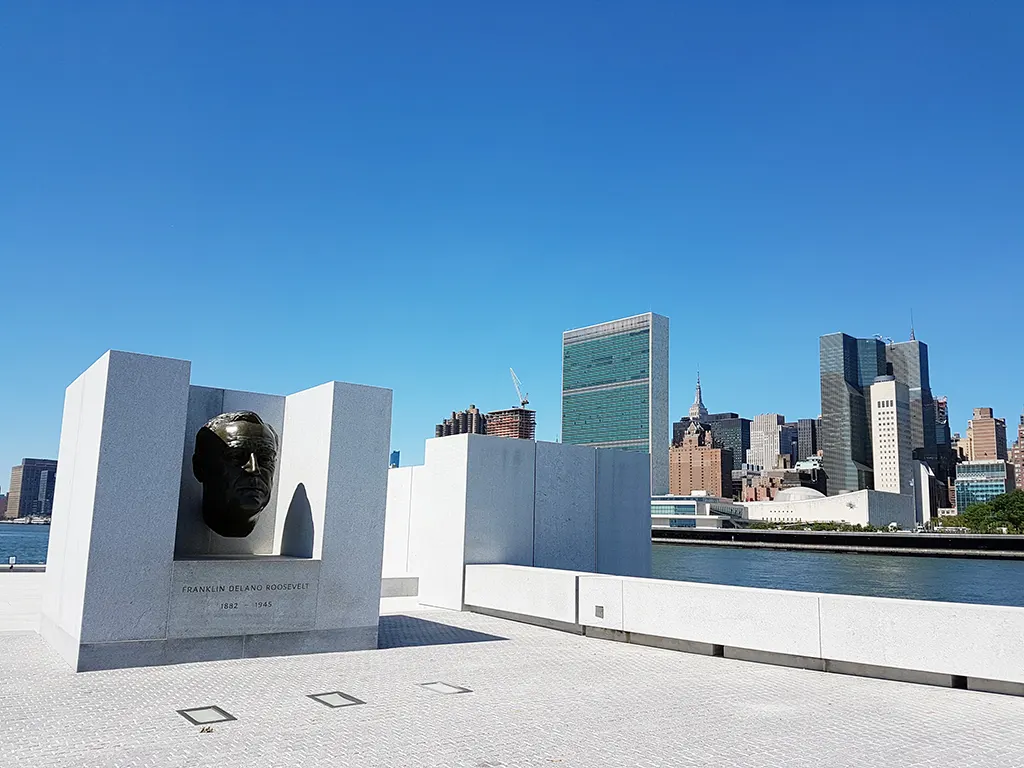
The park is a memorial to President Franklin D. Roosevelt, who gives the island its current name. If you're into architecture, know that this is a posthumous work by the iconic American architect Louis Kahn.
From this park you'll get a flawless panoramic view of Midtown Manhattan and Long Island City in Queens. Read all the details for visiting Four Freedoms Park.
Now you're ready to explore the north end of Roosevelt Island. Remember that if you're short on time, you'll see its most important spots on this Contrasts Tour in Spanish.
If you have time to spare, you can easily do the route on foot, or hop on the bus to keep visiting other historic New York sites on this island in the East River.
5. The Octagon
A few steps from the northern tip of Roosevelt Island you'll see a historic building: The Octagon, named for its eight-sided base.
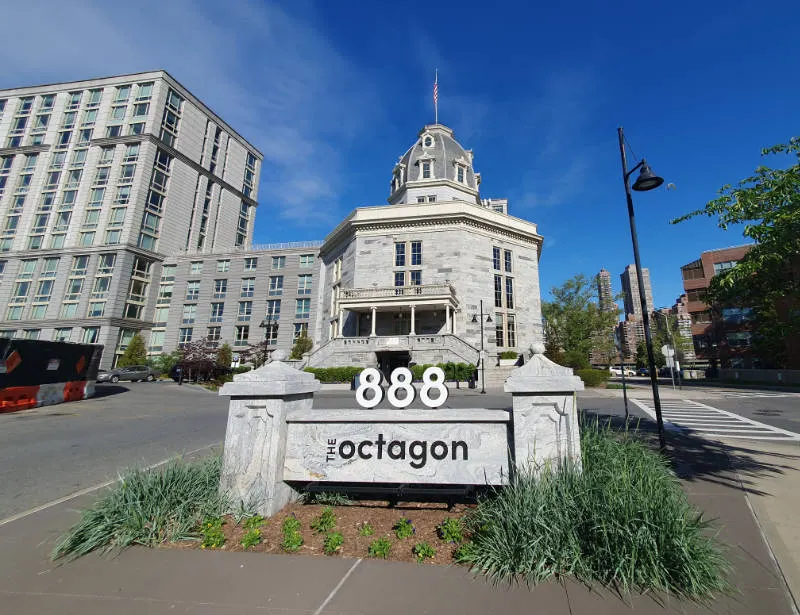
Thanks to New Yorkers' passion for preserving their history, today it's the entrance to a luxury condo building at 888 Main Street. You can step into the lobby and see an exhibit of vintage photos showing what the island looked like in the 19th century.
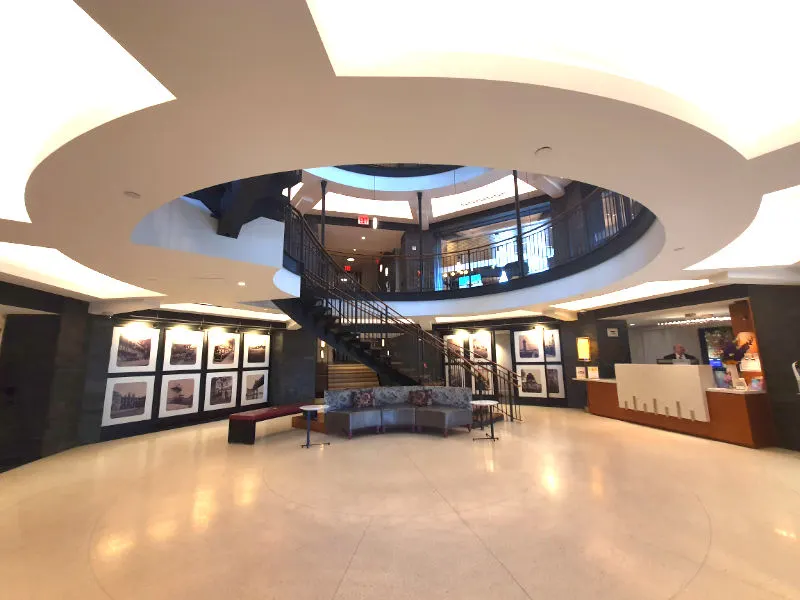
This domed structure was built in 1837 as the administrative offices of the New York City Lunatic Asylum, also known as the Blackwell Asylum or the Blackwell Insane Asylum.
The building was designed by architect Alexander Jackson Davis, and the location was chosen for its pleasant setting, in the belief that it would have a positive effect on the mental and physical rehabilitation of the people confined there.
During the 1890s the institution became Metropolitan Hospital, a general hospital known for its nursing school and for caring for tuberculosis patients. The Octagon served as its grand entrance.
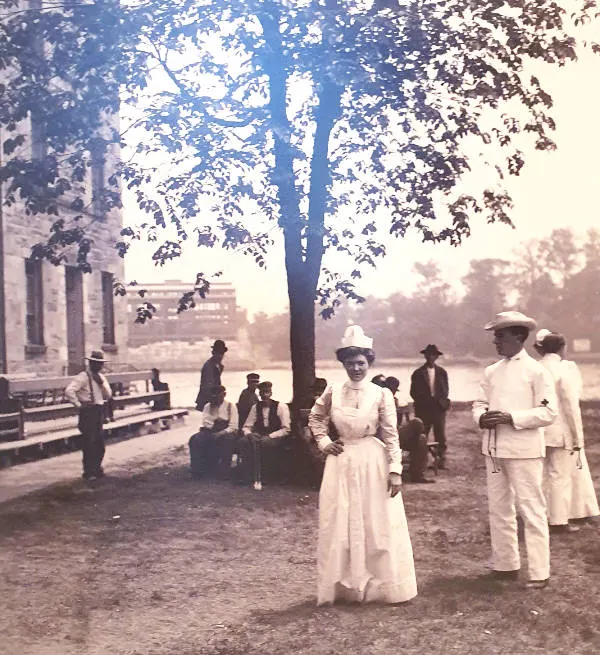
Around 1950 the hospital was abandoned and demolished, with the exception of the Octagon, a structure that survives to this day thanks to its listing on the National Register of Historic Places.
Although the building served as a psychiatric hospital for only a few years, it added to the island's eerie reputation. During the 19th and early 20th centuries, Roosevelt Island was also home to a prison, several almshouses for the poor and the Smallpox Hospital for contagious diseases.
6. Lighthouse Park
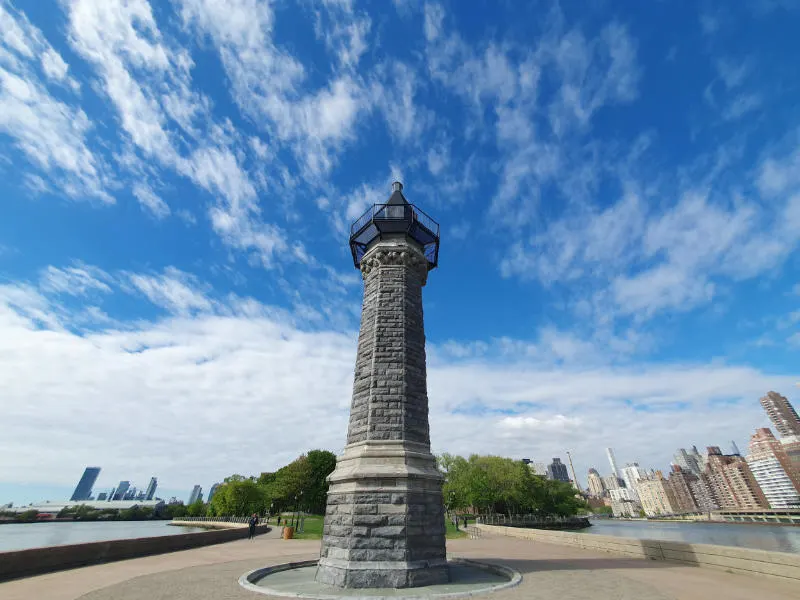
At the northern tip of Roosevelt Island you'll reach Lighthouse Park, a green space surrounding the Blackwell Island Lighthouse, built in 1872 and also on the National Register of Historic Places.
This 50-foot old lighthouse, Gothic in style and more than 150 years old, has witnessed the island's transformations. It was built to mark the landing where patients of the Blackwell Insane Asylum would disembark, and to guide ships through the treacherous waters of Hell Gate.
It was abandoned in the 1940s and its structure suffered heavy damage, as you can see in one of the historic photos displayed in The Octagon's lobby.
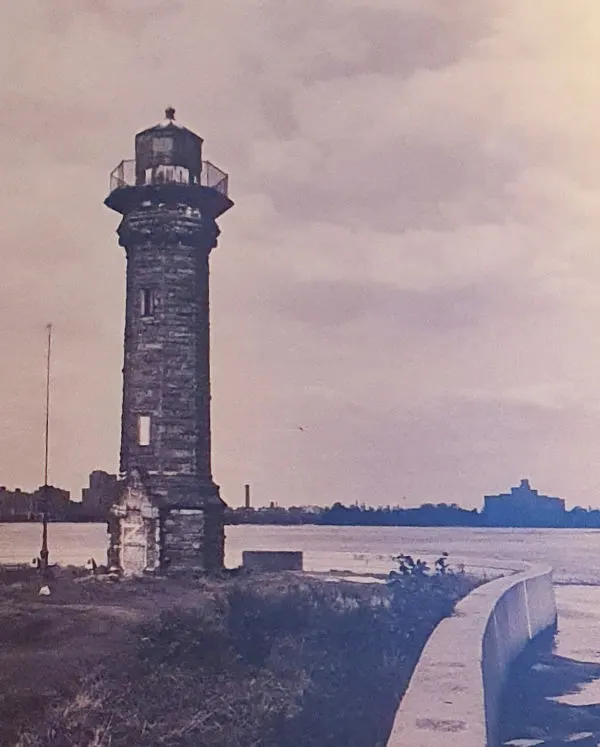
After a long restoration, it's now the centerpiece of a modern park and an icon of Roosevelt Island. I recommend standing at the northernmost tip of the island, just past the lighthouse, where it feels like you're sailing down the middle of the East River.
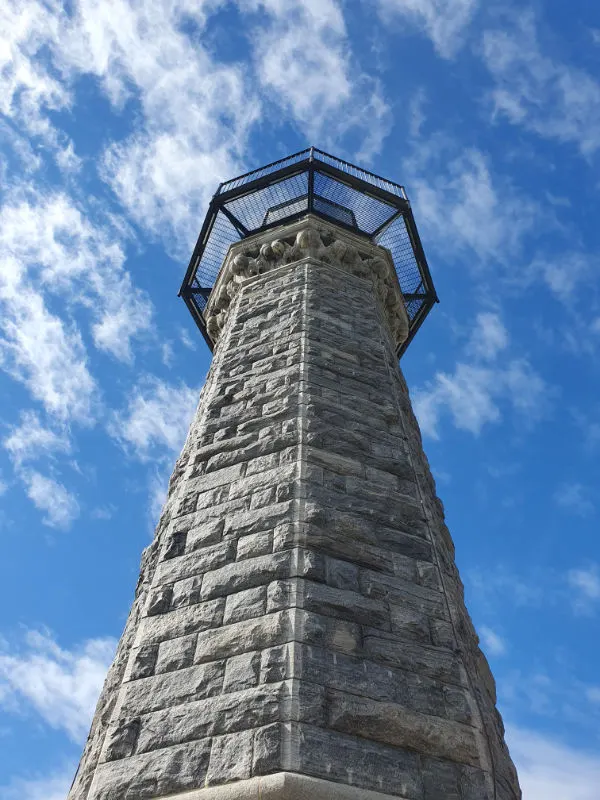
If all that walking or the noise of NYC is wearing you down, this is a great place to recharge and look at Manhattan from a distance.
7. The Girl Puzzle monument
Right in front of the lighthouse stands «The Girl Puzzle«, a work by artist Amanda Matthews honoring Nellie Bly (1864-1922), a pioneer of investigative journalism and an advocate for women's rights.
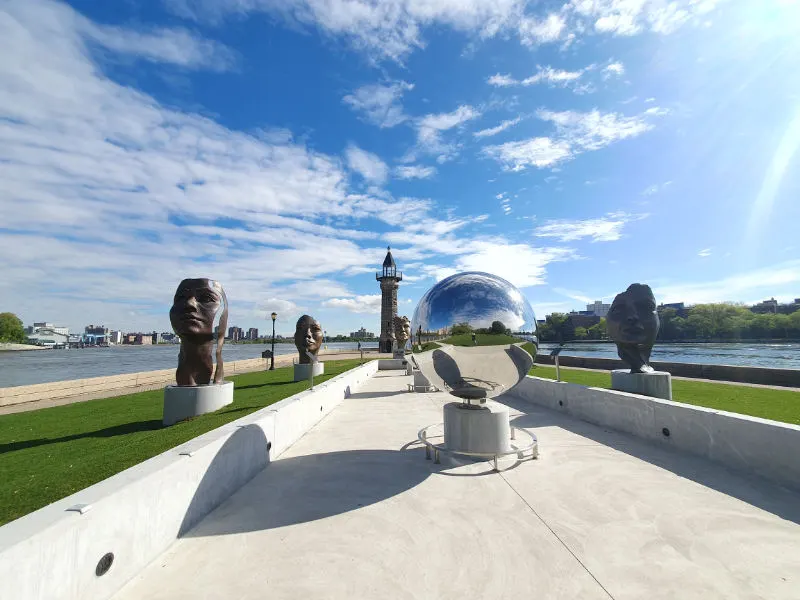
The monument is made up of five fragmented women's faces cast in bronze, including Nellie Bly's. The artist's idea was to represent the complexity of being a woman broken by adversity and then rebuilt stronger.
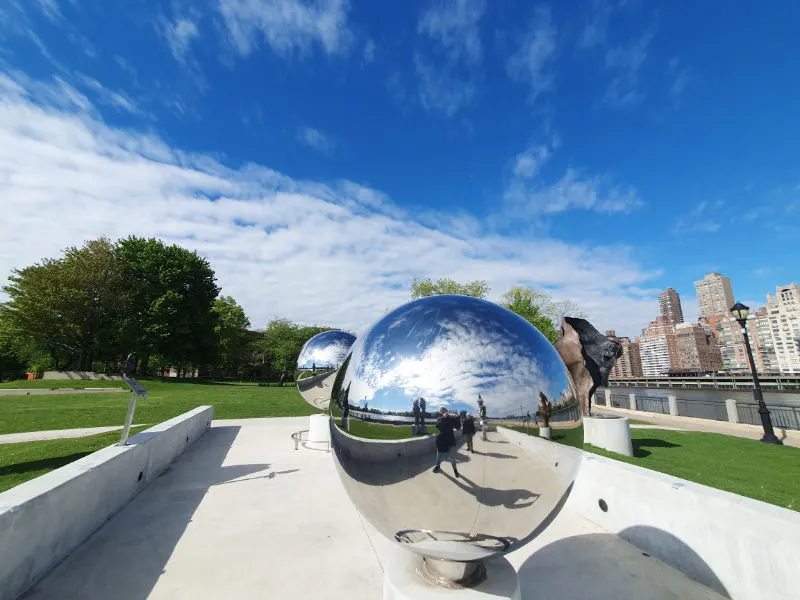
At the center of the installation there are 3 reflective spheres that make you part of the puzzle. It opened very recently, so you could still call it a secret corner of New York, though I can already picture it packed with people taking spectacular selfies. Go see it!
A short history of Roosevelt Island
Blackwell Island was its first English name, since it belonged to the Blackwell family for nearly two centuries.
In 1828 New York City bought it as a home for municipal institutions that would have made the neighbors nervous anywhere else in the city, among them a prison, the Blackwell lunatic asylum, almshouses for the poor and hospitals for contagious diseases. From then on it was called Welfare Island.
In 1973 it was renamed with its current name, Roosevelt Island, in honor of Franklin D. Roosevelt, the 32nd president of the United States. It's also said the change was meant to distance the island from its grim past and revive it as a modern residential neighborhood.
How to get to Roosevelt Island
As I mentioned, the most fun option is the scenic ride on the Roosevelt Island Tram alongside the Queensboro Bridge. Best of all, the same MetroCard gets you on board.
You can also take the subway on the F line to the Roosevelt Island station.
Another option, and a nice little outing on the way to the island, is the NYC Ferry Astoria route, which has a stop on Roosevelt Island.